
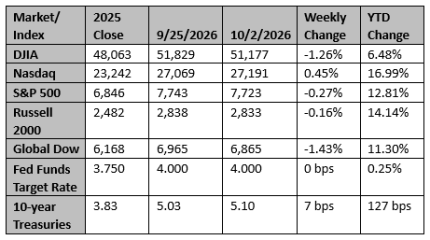
Rate Hike Likely Deferred to December Only one month ago, the big story about the US economy was how strong it was. The August jobs report, released in early September, showed that payrolls rose 162,000 for the month. Meanwhile, at one point, the Atlanta Fed’s “GDP Now” model was estimating real GDP would grow more than 5% at an annual rate in the third quarter. This impression of the economy shifted on Friday when the Labor Department reported that payrolls were up only 29,000 in Se… View More
Authors
Fortem Financial

Post 1 to 10 of 639
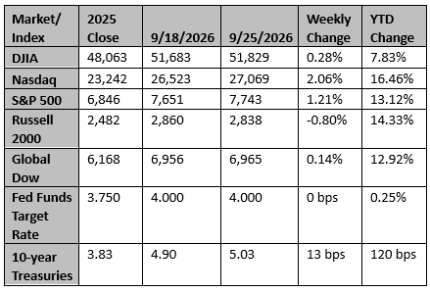
The bond market became unruly last week The bond market became unruly last week, with the 10-year Treasury yield ending higher at 5.16%. Since inflation expectations measures have stayed relatively stable, by process of elimination, recent moves have reflected real growth expectations and the term premium. Geopolitics & commodity prices have remained key sources of uncertainty. While there was hope around the UN meeting early last week, it seems clear the global political situation rem… View More
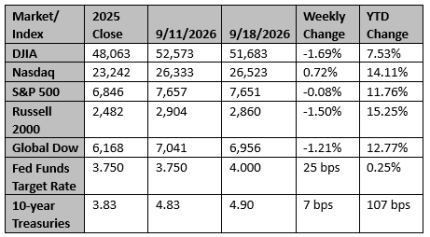
Will Something Break? Bond Yields, Inflation, & Market Risk Bond markets have weakened steadily in recent months despite widespread rate hikes and hawkish central-bank rhetoric. Firming global growth, accommodative monetary conditions, expanding budget deficits, a surge in AI-related corporate borrowing, and sticky inflation have all pushed yields higher and dashed hopes for lower rates. Meanwhile, political efforts to cap U.S. Treasury yields have backfired. Summary Stocks were mixed… View More
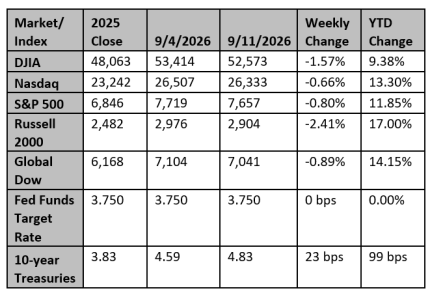
Bond Yield Increases Are Finally Impacting Equities Stocks pulled back last week as oil approached $100 per barrel, inflation remained elevated, and bond yields continued to rise. Investors are grappling with an escalation of war on two fronts: the military war between the U.S. and Iran, and the trade war between the U.S. and Canada. The still supportive global economic outlook implies the uptrend in earnings will persist, but the risks of a slowdown as 2027 develops are material. Get Bob's tak… View More
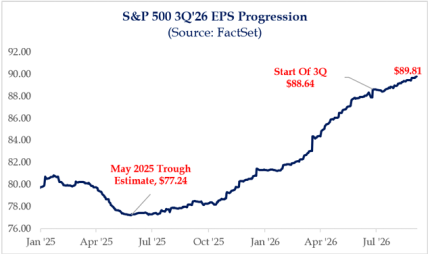
3Q Estimate Being Revised Higher Marginally Up until this point, the earnings discussion has largely focused on technology and AI capex, but one thing we noticed this past earnings season is that a “beat and raise” is not always enough to push a stock higher. Expectations are already quite high, and the bar continues to rise. Looking ahead to the third quarter, we are seeing estimates continue to be revised upward. Since the beginning of the third quarter, the consensus estimate has increas… View More
Federal Reserve Chairman Kevin Warsh used his Jackson Hole speech last week to lay out his views on monetary policy. Two things jumped off the pages of his speech. First, "Fedspeak" may be making a comeback. Former Fed Chairman Alan Greenspan became famous for phrases like "irrational exuberance." One section of Warsh's speech, titled "Preparing for Future Policy Conjunctures," felt like a throwback. "Conjunctures," really? Greenspan would be proud. Second, the narrative about Warsh is that he… View More
Will Higher Interest Rates Threaten Equities? Long-term Treasury yields continue to face upward pressure as economic growth remains solid, inflation stays sticky, and government finances deteriorate. While the Treasury’s efforts to support longer-dated bonds may provide some relief, they are unlikely to reverse the forces driving yields higher. Meanwhile, financial markets continue to benefit from rising corporate profits and supportive monetary and fiscal policies. Could higher rates and… View More
Headline CPI rose just 0.1% month-over-month and core CPI 0.2%, taking some pressure off the Fed to raise rates. But inflation remains sticky amid easier lending standards, stronger loan growth, and a growing money supply. Meanwhile, oil prices remain well below this year’s peak, with progressively less impact on financial markets, while bond yields continue to grind higher. Is a return to low and stable inflation really in the cards? Key Takeaways 1 . Headline CPI rose 0.1% m/m and 3.4%… View More
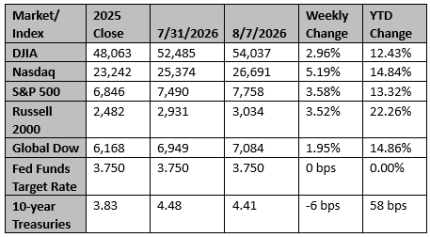
Is the ‘High-Risk Bull Market’ Getting Riskier? Stocks just posted their strongest week since April, thanks to exceptional earnings and renewed momentum in technology. The global economic expansion should continue to roll on, although U.S. and global equity markets remain heavily concentrated in technology/AI. For now, strong earnings are winning the tug-of-war against mounting market risks. The question is, for how long? Key Takeaways 1. July nonfarm payroll employment fell 23,000, m… View More
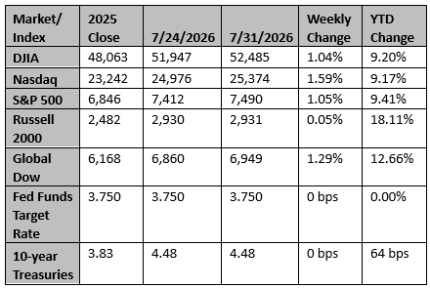
Three major releases landed in the past five trading days, and in each one the headline number and the underlying composition told different stories. Second-quarter GDP missed badly. Corporate earnings beat estimates by the widest margin on record. Manufacturing hit a four-year high this morning while survey respondents sounded miserable. Don’t let the headlines distract you from the data — the composition is where the useful information sits. Growth: A Weak Headline Over the Strongest … View More